Local field guide
Capilano mouth fishing tips
A practical guide to timing, water, casting, tackle, access, and safety for salmon fishing from Ambleside and the Capilano River mouth.
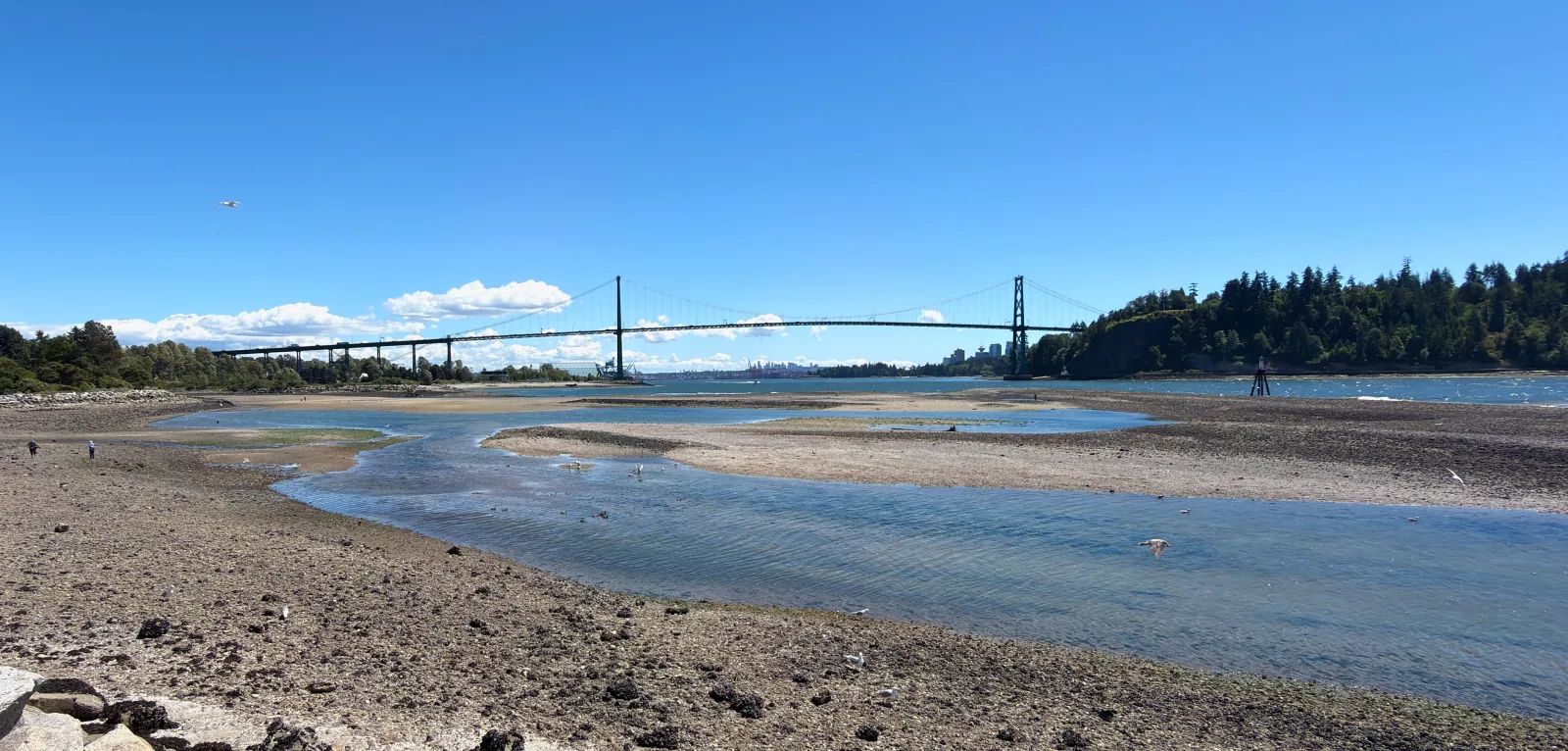
01 · Timing
Stack the tide and the light
A low-tide change near sunrise is the most useful starting point. It combines moving water, exposed structure, and lower light without pretending every day fishes the same.
Start before sunrise
The strongest shore window is often about one hour before sunrise through the first one or two hours of daylight. Cloud can keep the low-light window useful longer, but wind and waves still matter.
Use the last light
About an hour before sunset through the hour after sunset can be productive. Morning is usually the better first choice because the beach has had less daylight fishing pressure.
Work around low water
Start with roughly two hours on either side of low tide. Lows below about 2 m expose more of the bars and channels; very low water can make those features easier to read. A tide height is never a safety clearance.
- 01 Low-tide change around sunrise or sunset
- 02 Sunrise or sunset without the ideal tide
- 03 A low-tide change in full daylight
- 04 Bright, still midday conditions
02 · Fishing water
Choose the water, then the cast
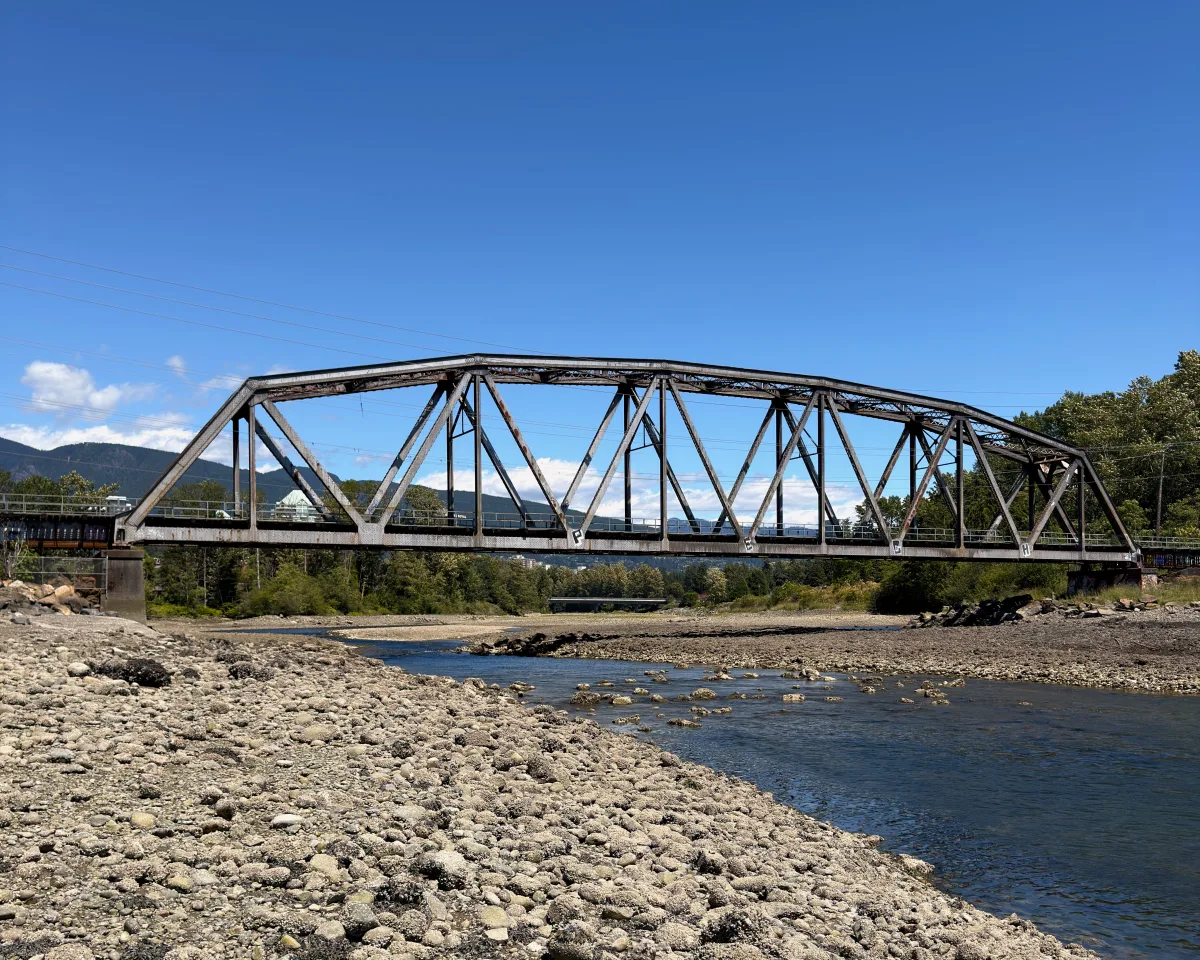
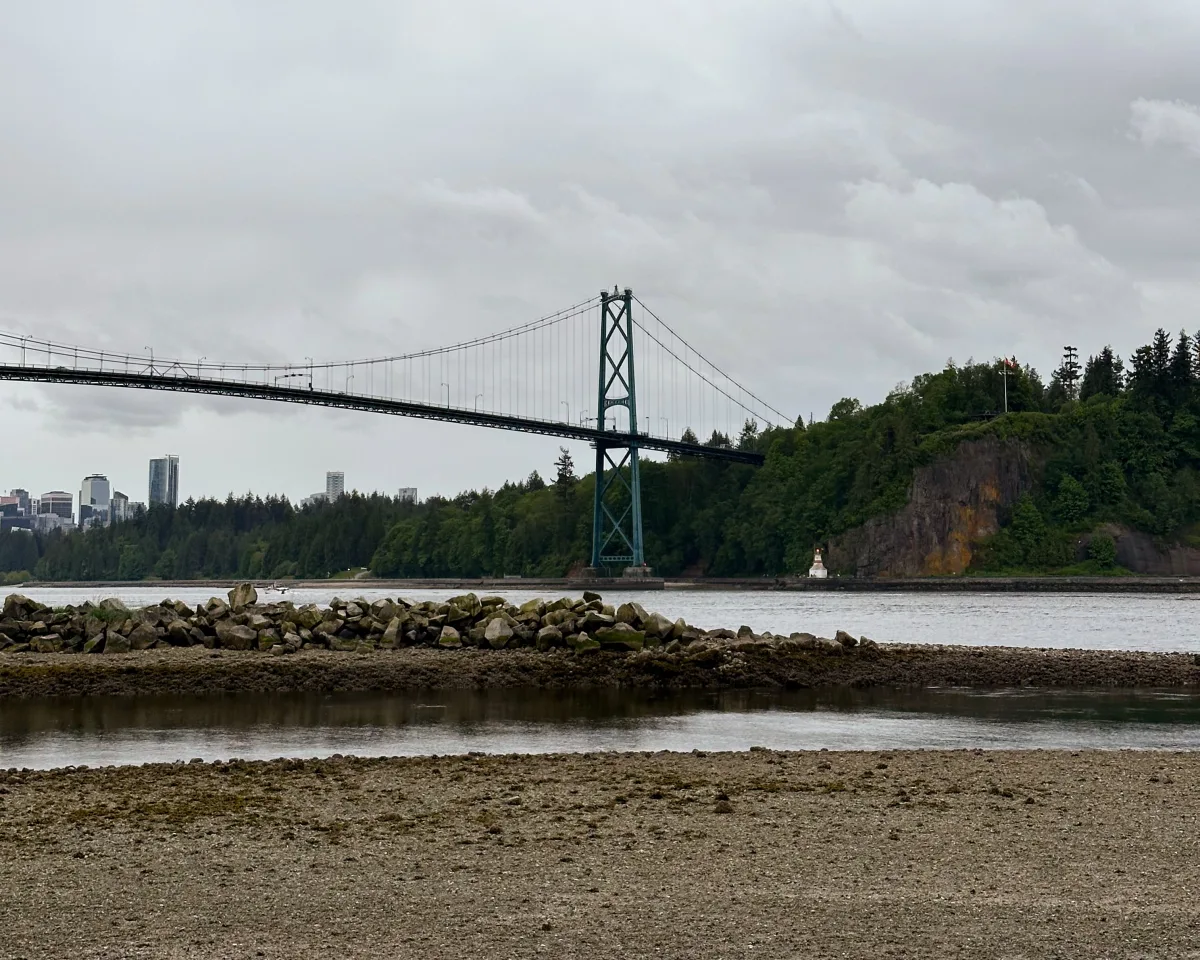
The mouth changes character with the tide. Use these areas as orientation, not exact legal or safety boundaries, and compare them with the interactive map.
Capilano River seam
At lower water, cast about 45° upstream and retrieve just fast enough to keep contact as the lure crosses the seam.
The Straight
Fish a fan: left, centre, then right. Cover new water before repeating the same line, at either high or low tide.
Inner pool
At low tide, work the quiet pocket with a methodical fan cast. It can suit flies and lighter presentations.
Navigation beacon bar
It becomes more visible below roughly 1.8–2.0 m. Only enter if the return path, current, waves, and footing are clearly safe.
High-tide shoreline
When the lower bars and pool are covered, fish the accessible edge and watch for lanes where current meets quieter water.
03 · Simple setup
A practical spinning outfit
You do not need a complicated shore setup. Choose tackle that can cast in wind, control a salmon near rocks, and be rinsed after saltwater use.
- Rod
- 8 ft 6 in–10 ft 6 in spinning rod with enough backbone for salmon
- Reel
- 3000–4000 size reel suitable for saltwater exposure
- Main line
- About 20 lb braided line for casting distance and control
- Leader
- 12–15 lb fluorocarbon, adjusted for water clarity and structure
- Lure weight
- Roughly 3/8–2/5 oz; go lighter if the lure keeps finding bottom
- Colours
- Pink, orange, copper, and chartreuse are useful starting choices
What to cast
Shore anglers commonly use casting spoons, compact jigs, hoochie-style lures, Tasmanian Devil–style lures, and other dense presentations that reach fish in wind. A single barbless hook is a practical default, but always confirm the current hook rules before fishing.
See the Ambleside gear guide →04 · Technique
Cover water without feeding the rocks
A controlled retrieve and a deliberate casting pattern catch more water—and fewer snags—than repeatedly throwing at one spot.
Cast upstream
Cast about 45° upstream. Wind fast enough to feel the lure as the current swings it across, then finish the retrieve before it settles.
Fan the shoreline
Start to one side, work through the centre, and finish on the other side. Change distance before repeating the pattern.
Stay above bottom
Begin winding sooner, keep the lure moving, or use a lighter presentation. Most lost lures were allowed to sink too long.
Leave casting room
Give neighbouring anglers space, follow any established casting rhythm, and move rather than crowd someone already working a lane.
05 · Shoreline safety
Plan the way back before stepping out
A low tide can make a bar look inviting while the current, incoming water, cold, or a vessel wake makes it dangerous. No fishing window is worth forcing.
Vessel wakes
Large wakes can arrive after the vessel is gone. Keep tackle and an escape route above the waterline.
Footing
Wet rocks, shells, mud, and seaweed are slippery and sharp. Move slowly and test every step.
Wading and bars
Wear a snug wading belt and a properly fitted PFD. Never cross water when you do not know the depth, current, or return route.
Wind and waves
Incoming north and northeast winds can build waves at Ambleside. Leave when the shoreline becomes harder to read or exit.
Seals
Seals may follow or take a hooked fish. Do not approach or feed them; give wildlife room and land fish efficiently.
06 · After a bite
Identify first, retain second
Know the species and the current retention rule before keeping a fish. A missing adipose fin can indicate a hatchery-origin Coho, but it is not automatic permission to retain that fish.
If you are unsure
Keep the fish in the water, minimize handling, and release it promptly. Carry pliers, know how to identify local salmon before fishing, and check the current Area 28 page again whenever openings, limits, or species rules may have changed.
Check current DFO Area 28 rules ↗Access & official sources
Useful before the trip
Ambleside Park has beach access, washrooms, picnic areas, and paid and free parking nearby. Check every posted sign for current hours, restrictions, closures, and rates.